History of The Green, Wallsend
No-one knows when The Green came into existence, or why. The probable explanation is, when the Romans abandoned the fort of Segedunum in AD 454, the river bank was no longer a safe place for the local population to live, so they moved up the side of the valley to the present location of The Green and founded a new village there. This must have been established, at the latest, by the time that the Church of The Holy Cross was built, c.1150, in what is now the Burn Closes, to serve the needs of the inhabitants. It is probably much older.
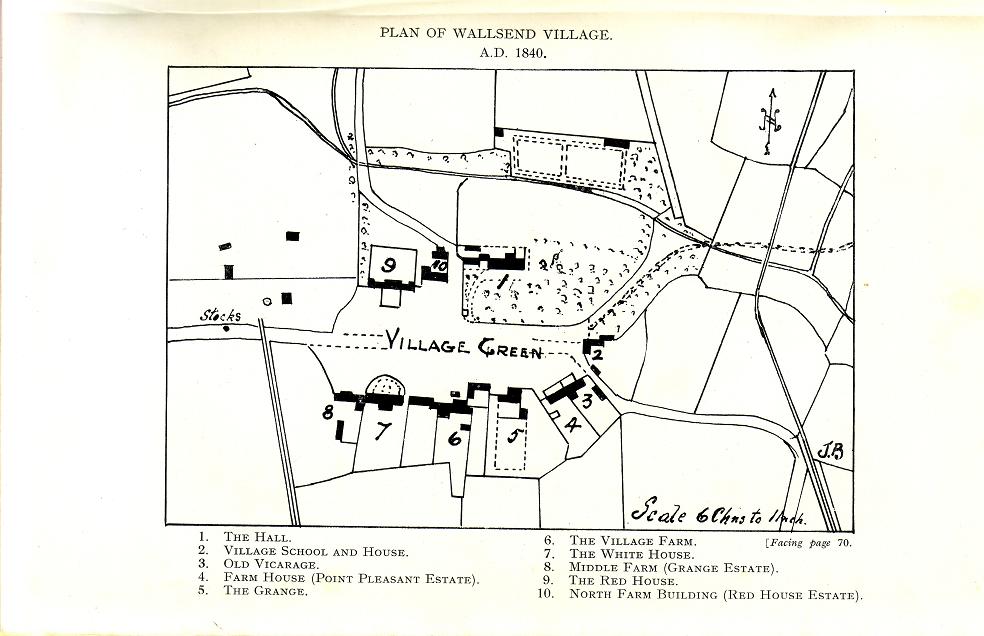
The Village of Wallsend
Until the middle of the 19th century, the village of Wallsend consisted of a number of houses and farms clustered around and facing onto the village green itself. This basic arrangement survives today, although it has been compromised by the creation of wide side streets leading away from the green at Grange Villas and Grange Close and the cul-de-sacs at Whitehouse Mews and Hunter’s Lodge.
During the second half of the 19th century, Wallsend became transformed into a sizeable town; the former fields between The Green and the river to the south filling with dense terraced streets, and those to the north with mainly semi-detached housing. Richardson Dees Park and further terraced housing was created to the west. The village green survived, although reduced in size by the enclosure of land in front of The Red House (now forming the “private green” in front of Park Villas and Hawthorn Villas).
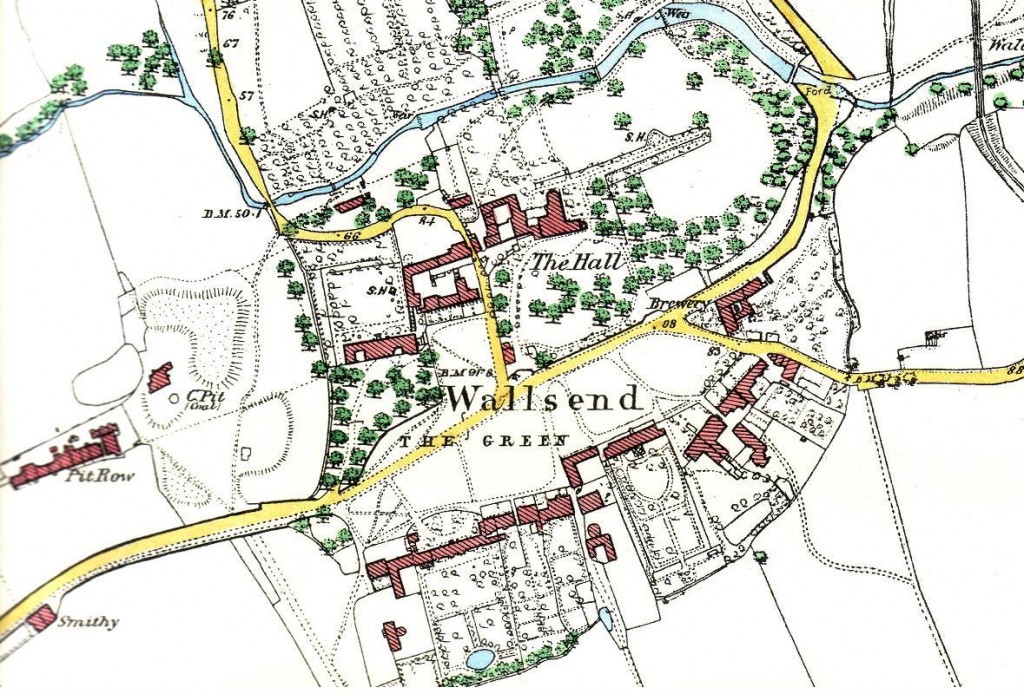
The Green remains a closely-knit and very stable residential community. Many residents have lived there for the whole or a substantial part of their lives. Houses on The Green rarely come onto the market and are usually quickly sold, either to local people who have always wanted to live there or to discerning newcomers who recognise and appreciate the unique character of the area. As Lady Hale remarked in a recent decision of The Supreme Court concerning village greens:
“…many people are attracted to properties near a village green because of the recreational opportunities it offers and the community spirit which these engender – anyone who grew up with a traditional village green can understand the focus it brings to village life which would not be there if the green were not there.”
Statutory Protection
The Wallsend Village Green Bye-Laws 1908 are believed to remain extant.
The Green is also registered as a village green under the Commons Registration Act 1965. This prevents any development of the land comprising the village green itself, which must be preserved as being “land on which the inhabitants of [the] locality have a customary right to indulge in lawful sports and pastimes”.
At the time of registration, ownership of The Green was obscure. Wallsend Borough Council claimed ownership but failed to produce any evidence or attend a hearing before the Commons Commissioner, who concluded that no-one had demonstrated ownership. Ironically, the effect of the legislation was that ownership then vested by default in Wallsend Borough Council as the local authority, to be held on statutory trust for the local inhabitants. Click here to see the full decision.